A Different Kind of Beekeeping
Conventional beekeeping optimizes for honey. A Layens hive paired with natural beekeeping optimizes for bees. Here's what that means in practice.
Start with the Tree
The design principle behind everything else
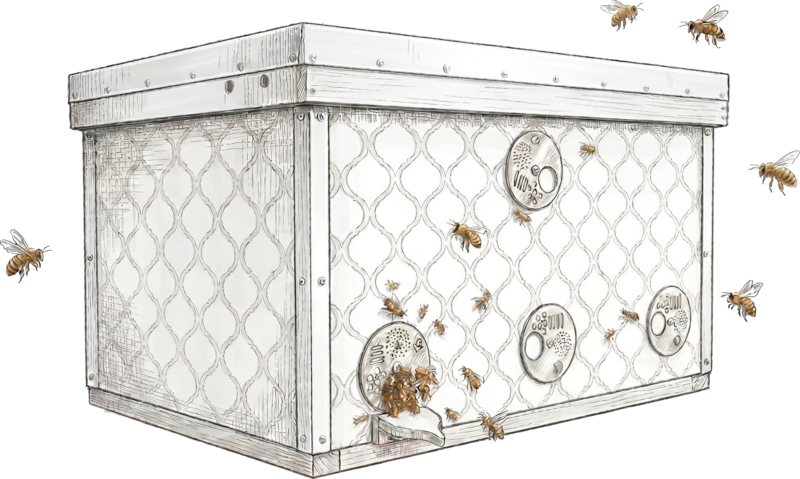
When a honeybee swarm picks its own home, it almost always picks a tree cavity. Thick walls. Small entrance. Vertical comb hanging from the ceiling. Protected from wind, insulated from cold, dark and defensible.
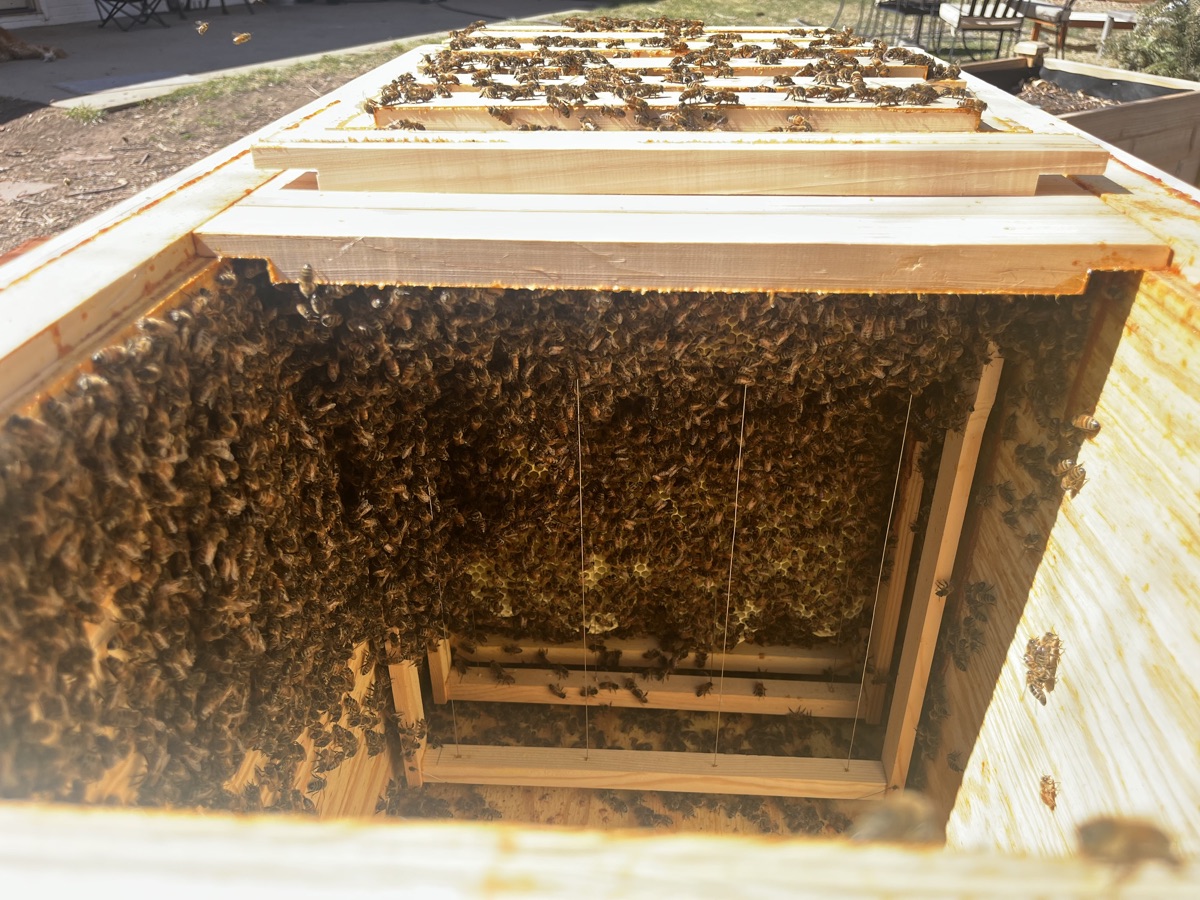
A Layens hive is reverse-engineered from that choice. Thick insulated walls — 1.5 inches — simulate the thermal mass of a living tree. The horizontal layout lets bees build comb the way they want to, expanding laterally into empty frames rather than being forced upward through stacked boxes.
This isn't a minor design difference. It changes everything downstream — how bees overwinter, how they manage pests, how you inspect them, and what you don't have to do.
Eight Differences
What changes when the hive and the approach are designed around the bee.
Swarming
Conventional: prevent swarming at all costs — lost bees, lost honey. Layens: let them swarm. Swarming is hygienic behavior. It breaks the brood cycle, shakes varroa mites, and spreads bee genetics across the landscape. And if you're on the trap network, we might catch them.
Winter
Conventional: thin wooden walls, sometimes wrapped in tar paper or foam. Layens: 1.5-inch insulated walls simulate the thermal mass of a living tree. Bees cluster less, eat less of their own honey, and emerge stronger in spring.
Honey Space
Conventional: stack supers on top, then pull them off — 60+ lbs each. Layens: ample horizontal frames for honey storage. Bees build to the side, not up. No frame migration between boxes, no heavy supers to hoist.
Inspections
Conventional: pull apart stacked boxes, heavy lifting, smoker often required. Layens: slide frames laterally. One box, one level, no stacking. A 5-minute check instead of a 30-minute deconstruction.
Treatments
Conventional: miticide strips, oxalic acid vaporizers, feeding schedules, essential oil drizzles. Layens: nothing. No feeding, no treatments, no chemicals. The bees manage or they don't — and the ones that manage produce strong offspring.
Transport
Conventional: hives trucked across the country to follow pollination contracts — almonds in February, blueberries in June. Layens: permanent home. Never moved. Bees orient to their landscape and stay put.
Local Stock
Conventional: buy package bees shipped from California or Texas — bred for production, not your climate. Layens: catch local feral swarms already adapted to your ecology. Bees that survived here without help are the best starting genetics for bees that will thrive here without help.
Losses
Conventional: fight losses with interventions, prop up weak genetics with treatments and supplemental feeding. Layens: accept losses as the cost of building locally adapted stock. Conventional bees are dying despite our best efforts — ours are getting stronger.
Let Them Swarm!
The most controversial difference — and the most important
Conventional beekeeping treats swarming as a management failure — lost bees, lost honey, lost productivity. Beekeepers split colonies preemptively, clip queen wings, and destroy swarm cells to prevent it.
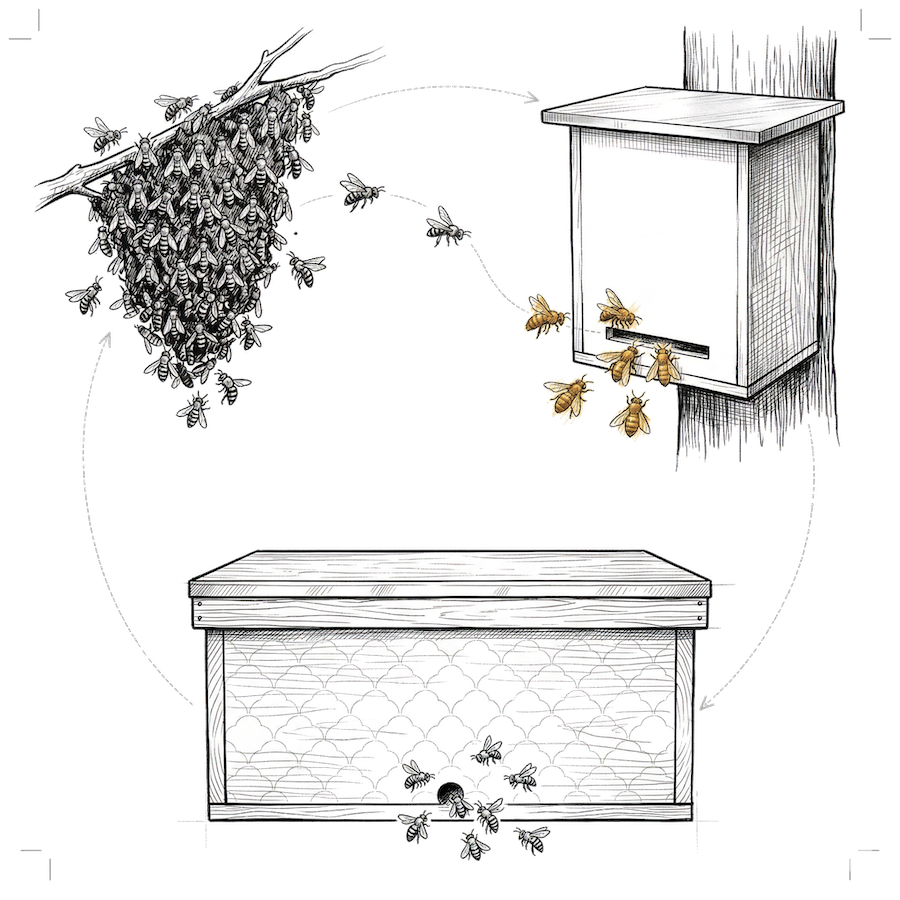
But swarming is how colonies reproduce. It's the most natural thing a healthy colony does. When a colony swarms, it breaks the brood cycle — creating a broodless period that disrupts varroa mite reproduction. The old queen leaves with experienced foragers; the new queen mates with diverse drones. Both halves of the split emerge genetically refreshed.
When a Layens colony swarms, it's not a loss — it's a new colony looking for a home. That's what the swarm trap network is for. Your hive's swarm might end up in a neighbor's trap, populating their first hive. The network grows.
What You Don't Do
Simpler for you. Better for them.
No Feeding
No sugar syrup, no pollen patties. Bees overwinter on their own honey in a well-insulated home. If they don't have enough, that's information — not a problem to solve with corn syrup.
No Treatments
No miticide strips, no oxalic acid, no essential oil drizzles. The colony's immune system is the treatment. Bees that survive varroa without help produce offspring that survive varroa without help.
No Heavy Lifting
No 60-lb supers to hoist. No stacking and unstacking. Frames slide in and out at waist height. Your back will thank you. Your bees won't care — they never liked being disassembled anyway.
“I kept 200 colonies in Langstroth equipment for years before switching to Layens. No heavy lifting, no bending over all day, much less disturbance during inspections. The hives are insulated year-round and the equipment stays in the field. It's simpler for me and I believe it encourages better bee health.”
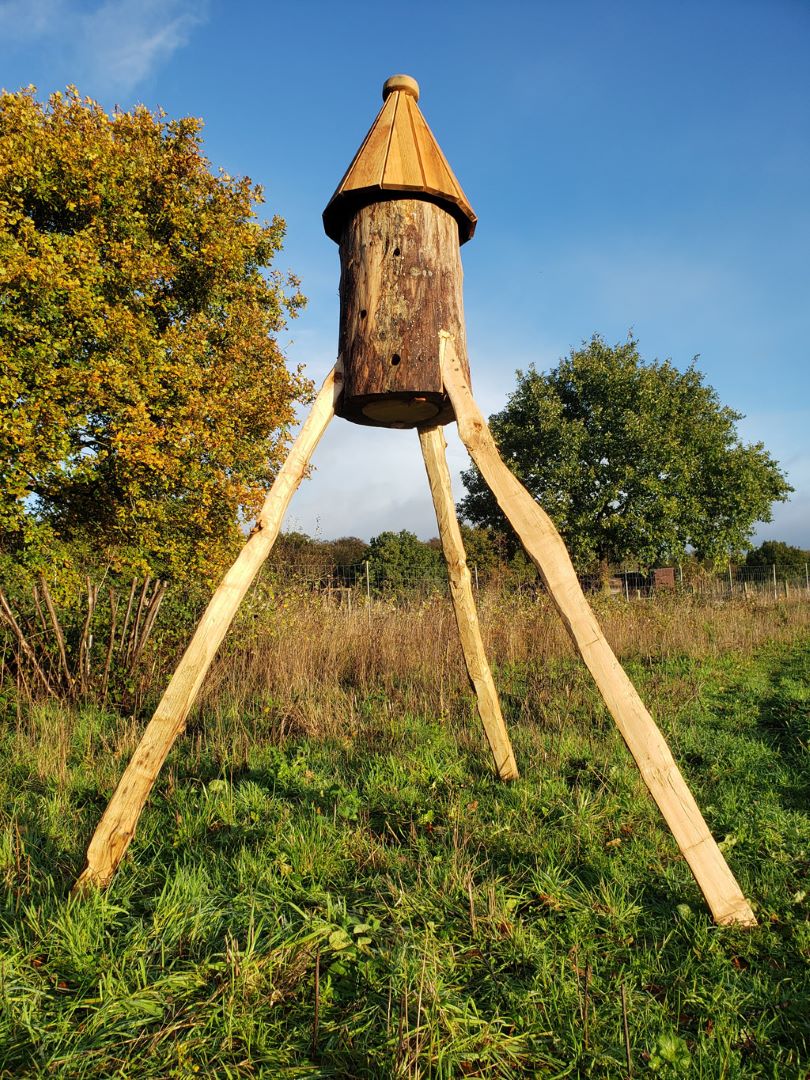
The Ultimate Bee Home
We don't go this far — but it's inspiring
At the far end of the spectrum: log bee hives — hollowed-out tree trunks raised on legs. No frames, no harvesting, no management at all. A 10-inch diameter cavity with thick log walls and three entrance holes. Bees move in and are never bothered again. Pure habitat.
We land somewhere in between. Layens hives give you the tree-cavity insulation and the minimal-intervention philosophy, but with frames you can inspect and honey you can (modestly) harvest. Log hives are the north star — a reminder that bees did fine for millions of years before we showed up with smokers and sugar syrup.
What You Give Up
Honest tradeoffs worth knowing.
Less Honey
Layens bees keep more of their honey. You'll harvest less per hive than a conventional setup. If maximum honey production is your goal, this isn't your hive.
Mortality
Treatment-free means some colonies won't make it — but all beekeepers suffer losses, conventional or not. The difference is what you do about it: treat and prop up, or let local genetics adapt.
Fewer Equipment Options
Langstroth is the industry standard. Parts, frames, and accessories are everywhere. Layens gear is harder to find and usually made to order.
Breed Strong Bees
Accept losses, build resilience
Conventional beekeeping props up genetics that can't survive without intervention. Colonies are treated for mites, fed sugar in winter, requeened with commercially bred stock — and despite billions spent on treatments and research, colony losses keep climbing. The bees are dependent on us, and we're losing them anyway.
Natural beekeeping bets on the other direction. Local bees, caught from local swarms, adapted to local conditions, surviving on their own merits. A colony that overwinters treatment-free and builds up strong in spring — that's a colony worth propagating. One that doesn't make it tells you something too. Both outcomes improve the local gene pool.
This isn't neglect. It's trusting a process that worked for millions of years before we intervened. The Gorge has its own climate, its own flora, its own pressures. The bees that thrive here will be the bees that evolved here — not bees shipped from Georgia or bred for docility in a California lab.